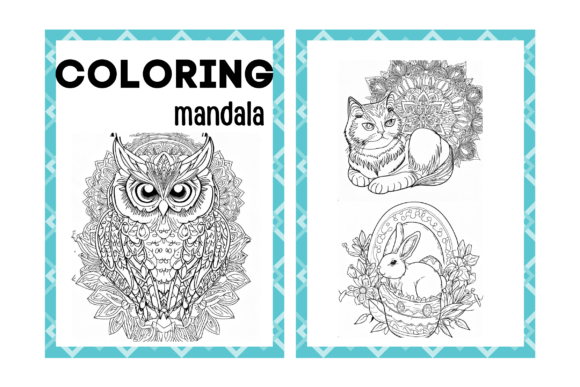
Coloring Mandala for Kids: A Creative Path to Focus and Fun
When parents and educators search for activities that balance entertainment with development, Coloring Mandala for Kids emerges as a surprisingly powerful tool. It is not merely about keeping children occupied; it is about offering them a structured yet open-ended creative experience. The appeal of a coloring mandala book for kids lies in its unique blend of repetition, symmetry, and freedom of choice. Unlike freehand drawing, which can sometimes overwhelm a young child with a blank page, mandalas provide a clear framework. Within that circle of patterns, a child can make endless decisions about color, shading, and emphasis, building confidence with every page they complete.
In recent years, the popularity of mandala coloring has expanded far beyond adult stress relief. Publishers and educators have recognized that children, too, benefit immensely from this focused activity. A well-designed coloring mandala book for kids offers designs that are age-appropriate, gradually increasing in complexity to match a child's growing skill set. From simple concentric rings to intricate floral and geometric arrangements, these books cater to a wide developmental range. The key is that the activity remains voluntary and joyful, never feeling like a chore.
What Makes a Coloring Mandala Book for Kids Effective?
Not all mandala books are created equal, especially when the intended audience is children. The most effective coloring mandala book for kids considers several critical factors. First, the line thickness matters. Young children who are still developing fine motor control benefit from thicker, bolder outlines that provide clear boundaries. As they grow, thinner lines and smaller spaces offer a natural progression of challenge. Second, the variety of designs should be broad enough to prevent boredom but consistent enough to maintain the mandala theme. A good book might include simple shapes like circles and squares early on, then transition to more complex patterns like stars, flowers, and geometric shapes later in the book.
Gradual Complexity Keeps Children Engaged
Children become frustrated when a task is too difficult, but they also lose interest when it is too easy. A thoughtfully curated coloring mandala book for kids solves this problem by arranging pages in order of increasing complexity. The first few pages might feature large, open spaces with only a few sections to color. Midway through the book, the designs become denser, incorporating repeating motifs and smaller areas that require more precision. Toward the end, children encounter intricate patterns that challenge their patience and attention to detail. This progression mirrors the natural development of hand-eye coordination and spatial awareness, making the book a growth tool as much as a source of entertainment.
Practical Benefits of Mandala Coloring for Children
The benefits of Coloring Mandala for Kids extend well beyond simple amusement. Parents often notice improvements in several key areas after just a few sessions of regular coloring. One of the most immediate benefits is the improvement of fine motor skills. Holding a crayon, marker, or colored pencil and staying within the lines requires precise finger movements. Repeated practice strengthens the small muscles in the hands and fingers, which directly supports handwriting readiness. Children who struggle with pencil grip or letter formation often find mandala coloring to be a low-pressure way to build the same muscle groups.
Enhancing Focus and Mindfulness
In a world filled with screens and constant notifications, the ability to focus on a single task for an extended period is increasingly rare. Coloring Mandala for Kids naturally encourages sustained attention. The repetitive, circular patterns have a calming effect on the nervous system. As a child selects colors and fills in each section, their breathing often slows, their shoulders relax, and they enter a state of mild focus similar to meditation. This is mindfulness in action, but it happens organically without any need for instruction. Children do not need to be told to be mindful; the mandala itself invites them into that state.
Teachers have observed that a short mandala coloring session before a challenging academic task can significantly improve a child's readiness to learn. It acts as a mental reset, clearing away anxiety and sharpening concentration. For children with attention difficulties, the predictable structure of a mandala provides a safe anchor. They know what to expect, which reduces cognitive load and allows them to engage more fully.
Hand-Eye Coordination and Spatial Reasoning
Every time a child colors a mandala, they are practicing hand-eye coordination. The brain must process visual information about where the line is located, then send signals to the hand to adjust pressure and direction accordingly. Over time, this feedback loop becomes faster and more accurate. Additionally, mandalas inherently teach spatial reasoning. Children learn to recognize symmetry, balance, and proportion. They begin to understand how repeating patterns fit together, which is a foundational skill for geometry, art, and even coding. A coloring mandala book for kids that includes geometric patterns like stars, hexagons, and concentric circles offers an early, intuitive introduction to mathematical concepts.
Creative Expression Within a Structured Framework
One of the most compelling aspects of Coloring Mandala for Kids is the balance between structure and freedom. Some children feel paralyzed by an entirely blank page. They want to draw but do not know where to start. A mandala solves this problem by providing a complete design. The child does not need to invent the pattern; they only need to bring it to life through color. This lowers the barrier to entry, making art accessible to every child, regardless of drawing ability. At the same time, the choices they make are entirely their own. No two colored mandalas will ever be exactly alike, even when starting from the same outline.
This autonomy is empowering. A child might decide to use warm colors on one side and cool colors on the other. They might choose to color each ring differently or create a rainbow effect. They might experiment with shading or leaving some areas white. Each decision is an exercise in creative thinking. Over time, children become more confident in their ability to make aesthetic choices, which carries over into other areas of life, from clothing selection to room decoration to problem-solving in school projects.
How to Choose the Right Coloring Mandala Book for Kids
With so many options available, selecting the right coloring mandala book for kids can feel overwhelming. A few practical considerations can simplify the decision. Age is the most obvious factor. For children aged three to five, look for books with very thick lines, large coloring areas, and no more than ten to fifteen sections per design. These books often feature themes that resonate with young children, such as animals, nature, or simple geometric shapes. For children aged six to nine, medium complexity designs with thinner lines and more sections are appropriate. Themes like flowers, stars, and symmetrical patterns work well. For pre-teens aged ten to twelve, highly detailed mandalas with intricate patterns and small spaces are ideal. These books often approach the complexity of adult mandala books but with child-friendly themes.
Paper quality is another important consideration. Thin paper can bleed through when markers are used, causing frustration. Look for books that specify thick, bleed-resistant paper, or at least single-sided pages that can be removed without damaging the design on the reverse. The binding should allow the book to lie flat, making it easier for a child to color near the spine. Spiral-bound books are often the best choice for young children because they can be folded back easily.
Theme and Variety Matter
The best coloring mandala book for kids includes a diverse range of themes to maintain interest over time. A book that only features floral patterns might appeal to one child but bore another. Look for books that mix nature motifs with geometric patterns, fantasy elements, and cultural designs. Some books include mandalas inspired by different cultures, which can be a gentle introduction to world art and traditions. Others incorporate hidden objects or patterns within the mandala, adding an element of discovery. For example, a mandala might contain hidden butterflies, stars, or animals that children can find and color in a special way. This gamification element keeps the activity fresh and exciting.
Integrating Mandala Coloring into Daily Life
Coloring Mandala for Kids fits naturally into several parts of a child's daily routine. Many families use mandala coloring as a wind-down activity before bedtime. The repetitive, calming nature of coloring helps transition from the high energy of play to the quiet state needed for sleep. Others use it as a morning warm-up activity before school, helping children center themselves before the demands of the day begin. In classroom settings, teachers often keep a basket of mandala pages available for early finishers or as a calm-down tool after recess.
Group mandala coloring is another powerful application. When children color together, they naturally talk about their color choices, share techniques, and admire each other's work. This social interaction builds communication skills and fosters a sense of community. Parents can join in as well, creating a shared activity that crosses generational lines. Coloring alongside a child models focus and creativity, and it provides a natural opportunity for conversation without the pressure of direct eye contact.
Observing the Long-Term Impact
Parents who introduce Coloring Mandala for Kids at an early age often notice long-term benefits that extend well into adolescence. Children who regularly engage in structured coloring activities tend to have better handwriting, stronger visual discrimination skills, and a greater willingness to attempt detailed tasks. They also develop a healthier relationship with mistakes. In mandala coloring, there is no wrong way to choose a color. A child might color a petal purple today and green tomorrow. This flexibility teaches them that creativity is iterative and that multiple solutions are valid. This mindset is invaluable in academic subjects like mathematics and writing, where perseverance and creative problem-solving are essential.
Furthermore, the sense of accomplishment that comes from completing a mandala should not be underestimated. Each finished page is a tangible product of effort and attention. Children can take pride in their work, display it on the refrigerator, or give it as a gift. This builds self-esteem and reinforces the value of completing a task from start to finish. Unlike digital activities that disappear with a click, a colored mandala remains as a physical reminder of what the child achieved.
Final Thoughts on Coloring Mandala for Kids
Whether used at home, in school, or on the go, Coloring Mandala for Kids offers a rich combination of fun, learning, and emotional regulation. The simple act of filling in a circular pattern with color touches on so many aspects of child development that it is easy to see why these books have become a staple in households worldwide. A good coloring mandala book for kids is more than just a collection of pages; it is a tool for growth, a source of calm, and a canvas for personal expression. When you hand a child a mandala and a set of crayons, you are giving them more than an activity. You are giving them a moment of peace in a busy world, and that is a gift that keeps on giving.
For parents looking to introduce this activity, the recommendation is simple: start simple, let the child lead, and keep the experience positive. There is no need to correct how a child colors a mandala. The goal is not perfection; it is participation. Over time, you will likely see improvements not only in their coloring ability but also in their patience, focus, and creative confidence. And that is what makes Coloring Mandala for Kids such a worthwhile addition to any child's daily routine.