Why a Credit Card Use Tracker Makes Sense for Real People Like You
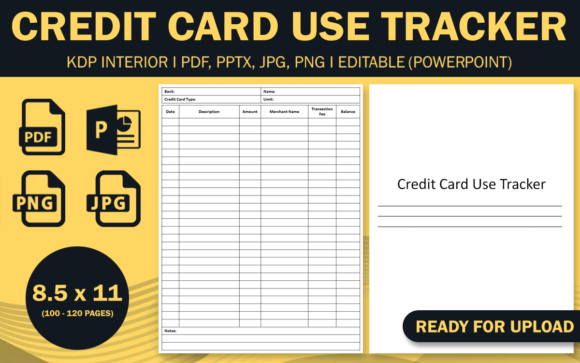
Credit cards are part of everyday life for most adults. Whether you use one for convenience, rewards, building credit, or covering an unexpected expense, it is easy to lose track of where your money actually goes. A Credit Card Use Tracker is a practical tool that helps you monitor every swipe, tap, or online checkout without relying on memory alone. The version available as a complete download includes editable PowerPoint files, ready-to-upload PDFs for KDP, and high-resolution JPG and PNG files designed for a standard 8.5 × 11 inch trim size with no bleed. But beyond what comes in the download, the real value lies in how you actually use it.
What a Credit Card Use Tracker Really Does
At its core, this tracker is a structured way to record and review your credit card spending. Instead of waiting for your monthly statement to arrive, you log purchases as they happen. The interiors come in two versions—100 pages and 120 pages—so you can choose the one that fits your tracking style. The pages are high-resolution and tested for KDP, meaning they print cleanly whether you use them at home or through a professional service. But the real benefit is that you end up with a clear, month-by-month, purchase-by-purchase picture of your habits. No hidden fees, no surprises at the end of the billing cycle.
At Home for Personal Budgeting
Most people do not set out to overspend. It happens gradually. A coffee here, a subscription renewal there, a quick online order for something you forgot at the store. Over a month, these small charges add up. A Credit Card Use Tracker gives you a place to note every purchase right after you make it. You can keep the printed PDF on your desk or the PowerPoint file open on your laptop. The 100-page version works well for someone who wants to track a single card over several months. The 120-page version offers a bit more room, especially if you juggle multiple cards or want to add notes about returns or payments.
For Freelancers and Side Hustlers
Freelancers often use personal credit cards for business expenses because it is simpler than setting up a separate account right away. But when tax season comes around, separating personal charges from deductible ones becomes a headache. A dedicated tracker lets you log each expense with a note about its purpose. You can mark which purchases are for client work, which are supplies, and which are strictly personal. The PowerPoint file is editable, so you can customize columns or categories to match your specific needs. When you download the package, you get two PDF files—one for each page count—so you can print a version for your current card and keep the other as a backup.
For Small Business Owners
Running a small business means keeping an eye on cash flow. Credit cards are often used for inventory, software subscriptions, travel, and client meals. A tracker helps you see at a glance how much you are charging each month and whether those expenses align with your budget. You can use the JPG or PNG files to insert a digital copy into your planning system or tablet. The high-resolution interiors ensure that even small text or numbers print clearly. Over time, you build a record that makes it easier to review spending patterns and adjust before things get tight.
For Creators and Educators
If you teach personal finance, run a blog about budgeting, or create content around money management, a Credit Card Use Tracker can serve as a real example for your audience. You can show how you use it yourself, offer the editable source file as a resource, or reference the tracking process in your content. The PowerPoint file is especially useful here because you can modify it to fit a specific lesson or workshop. The two PDF interiors are ready for upload to KDP, so if you publish a low-content book or workbook, you have a tested product that already meets print standards.
Everyday Users Who Want Control
Maybe you are not a freelancer or a business owner. You just want to stop wondering where your money went at the end of the month. A tracker changes that. You write down each purchase, and after a few weeks, patterns emerge. Maybe you eat out more than you thought. Maybe that streaming service you barely use is still charging you. The act of tracking alone often leads to more mindful spending. The 8.5 × 11 inch size is familiar and easy to handle, and the no-bleed design means you can print at home without worrying about edge issues.
Planners and Hobbyists
People who enjoy bullet journals, planners, or printable systems often appreciate a dedicated tracker that is already formatted. Instead of drawing your own tables or searching for a template online, you have a complete set of pages that are consistent and clean. The high-resolution PNG and JPG files are great for digital planners on tablets. You can import them into note-taking apps and fill them in with a stylus. The editable PowerPoint file lets you adjust column widths, add categories, or change the header if you prefer a different layout.
Print-on-Demand Publishers
If you sell on KDP or similar platforms, the included PDFs are a practical asset. They have been tested on KDP, so you know they meet the platform's requirements. The 100-page and 120-page interiors give you two options for different price points or customer preferences. You can combine them with a cover of your own design and publish as a low-content book. The fact that the files are high-resolution means the printed result will look professional. This is not a generic template that blurs when printed. It is built for actual use.
Choose the Right Page Count for Your Style
The download includes both 100-page and 120-page PDFs. If you plan to track one card and prefer a slimmer book, the 100-page version is a good fit. If you want extra pages for notes, additional cards, or a longer tracking period, go with the 120-page version. You can also use the PowerPoint file to add your own pages if you need more space. Think about how often you use your card and how detailed you want your entries to be.
Decide Between Digital and Print
The package gives you options. The JPG and PNG files work well for digital tracking on a tablet or phone. The PDFs are ready to print. The PowerPoint file lets you customize before printing or using digitally. Consider your workflow. If you always have your phone nearby, a digital version might be more convenient. If you like writing things down by hand, print the PDF and keep it with your receipts.
Use It Consistently for Best Results
A tracker only works if you use it regularly. Set a simple habit. Log a purchase right after you make it, or set aside five minutes at the end of each day to update the tracker. The structure of the pages makes it easy to see your spending at a glance. Over weeks and months, you will have a record that shows not just individual purchases, but your overall financial behavior.
What Makes This Download Different
There are plenty of budget trackers available online. What sets this one apart is the combination of formats and the fact that the interiors are ready for professional printing. The PowerPoint source file gives you control to edit, while the PDFs are polished and tested. The JPG and PNG files cover digital use. The trim size is standard and practical. Whether you are tracking your own spending, teaching others, or publishing your own book, the files are designed to work without extra tweaking.
Ultimately, a Credit Card Use Tracker is a tool for anyone who wants to move from guessing to knowing. It does not require complicated software or a financial background. It is a simple, repeatable system that fits into your existing routine. The download gives you the raw materials. How you use them is up to you.